How Do Maggots Get in Trash Cans, and How Can You Prevent Them?
Finding maggots in your trash can is unpleasant, but the explanation is usually straightforward. Adult flies are attracted to food waste and other decaying organic material. If they can reach that material, they may lay eggs, which later hatch into larvae, commonly called maggots.
The best prevention focuses on making your bin less attractive and accessible to flies. Sealing food waste, preventing leaks, keeping the lid closed, removing residue, and cleaning the container regularly can all help. In Gold Canyon, where warm conditions can speed the development of flies, consistent bin maintenance becomes especially useful. A trash bin cleaning service can also help remove the grime and organic buildup that a quick household rinse may leave behind.
How Do Maggots Get Into a Trash Can?
Maggots do not usually crawl into a clean trash can from somewhere else. In most cases, an adult fly first finds suitable organic material inside the container and lays eggs there.
House flies and several other fly species use moist, decaying material as breeding sites. Garbage, spoiled food, rotting fruits and vegetables, animal waste, and similar organic matter can provide the conditions their larvae need.
A typical chain of events looks like this:
Food or another organic material is thrown away.
A bag leaks, tears, remains open, or leaves residue inside the bin.
Flies detect the waste and gain access to the container.
Eggs are deposited on suitable organic material.
The eggs hatch, and the larvae begin feeding on the waste.
You may therefore discover maggots even when the bin looked relatively normal a day or two earlier.
Why Trash Cans Attract Flies
A trash bin can provide several things flies are looking for at the same time: food, moisture, organic residue, and shelter.
Food Residue and Organic Waste
Meat scraps, spoiled produce, pet waste, leftovers, food packaging, and liquids from discarded food can all leave organic material behind.
Even after the garbage truck empties the container, residue may remain stuck to the walls, bottom, hinges, or lid. Flies do not need a completely full trash can to find something attractive.
Leaking Trash Bags
A tied bag is helpful, but it does not guarantee that liquids will stay contained. Sharp packaging, excessive weight, or overfilling can puncture a bag.
Once liquid waste reaches the bottom of the cart, simply removing the bag does not remove the residue.
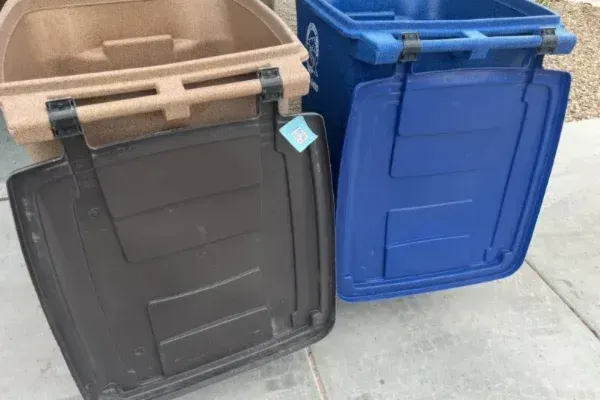
An Open or Poorly Closed Lid
A lid is one of the simplest physical barriers between flies and your garbage. University extension guidance on fly management commonly recommends keeping garbage in containers with tight-fitting lids.
Check whether your lid is warped, obstructed by an overfilled bag, or prevented from closing completely.
Moisture Inside the Bin
Moist organic waste is particularly suitable for many common flies. Keeping a garbage can as dry and clean as practical can reduce the conditions in which larvae develop.
Rainwater, leaking bags, spilled drinks, and liquids from decomposing food can all contribute.
Warm Weather
Warm conditions can accelerate the development of common flies. Texas A&M AgriLife Extension notes that house flies reproduce more rapidly during summer, while Colorado State University Extension similarly explains that several flies can develop quickly at warmer temperatures.
That makes regular trash-bin maintenance especially practical during hot periods in Arizona.
How to Prevent Maggots in Your Trash Can
No household routine can guarantee that a fly will never reach your garbage. You can, however, make the bin considerably less inviting.
Seal Food Waste Before It Goes Outside
Tie garbage bags securely before placing them in the outdoor cart. Pay particular attention to food waste and other moist organic material.
If a bag has been punctured or is leaking, placing it inside another suitable trash bag before disposal can help contain the mess.
Avoid Overfilling the Cart
An overflowing trash can often prevents the lid from closing correctly. It may also place more strain on bags, making leaks and tears more likely.
Keeping waste below the point where the lid can close normally removes one easy access route for flies.
Clean Up Leaks Promptly
After collection, look at the bottom and interior walls of the container.
If you see spilled liquid, bits of food, stuck debris, or other residue, cleaning it promptly prevents that material from sitting in the cart until the next pickup.
Keep the Lid Closed
Close the lid whenever you are not actively adding trash. If the lid no longer fits correctly because it is damaged or warped, check with your waste-cart provider about repair or replacement options.
A closed lid cannot guarantee fly prevention, but it creates a useful barrier.
Keep the Cart as Dry as Practical
After household cleaning, allow the bin to dry before filling it again when possible. Avoid intentionally leaving standing rinse water inside.
Drying the container will not eliminate every pest issue, but it removes one condition many flies favor.
Rinse Recyclables When Appropriate
Food residue can remain in recyclable cans, bottles, and containers. Guidance from pest-management specialists recommends rinsing food and beverage containers before recycling or disposal when residue is present.
Follow the recycling requirements of your local waste provider, since accepted materials and preparation rules can vary.
Why Maggots Can Return After You Rinse the Bin
A garden hose can be useful for routine maintenance. It can wash away loose debris, visible dirt, and some fresh residue.
The limitation is that a quick rinse may not remove material that has dried onto the bottom, collected in corners, coated the walls, or accumulated around hard-to-reach areas.
That is why you can rinse a trash can and still notice odors, grime, or renewed fly activity later. New garbage can also introduce fresh organic material immediately after a bin has been cleaned.
The goal is not to make a garbage cart permanently odorless or pest-proof. It is to reduce the buildup and food sources that make it attractive.
What to Do If Maggots Are Already in the Trash Can
Start by addressing the material they are feeding on.
Remove the garbage through your normal waste-disposal process, then clean away remaining organic matter and residue. Extension guidance on fly control consistently emphasizes sanitation and removal of the breeding material as central steps.
If you clean the bin yourself:
Wear household cleaning gloves.
Remove stuck food and debris.
Wash the interior according to the bin manufacturer's care guidance.
Follow the directions for any cleaning product you use.
Never mix household cleaning chemicals unless their manufacturers explicitly instruct you to do so.
Allow the cart to drain and dry where appropriate.
Keep the lid closed once the bin is back in use.
If you repeatedly find large numbers of flies or maggots even after removing waste and keeping the container clean, the source may be somewhere other than the trash cart. A significant or persistent pest problem may be better evaluated by an appropriately licensed pest-control professional. Trash-can cleaning is not a substitute for pest-control treatment.
How Professional Trash Bin Cleaning Differs From a Quick Rinse
You can clean a trash can yourself, and routine homeowner maintenance can be useful between deeper cleanings. Professional service simply offers another level of cleaning for people who do not want to scrub accumulated residue themselves or who want recurring maintenance.
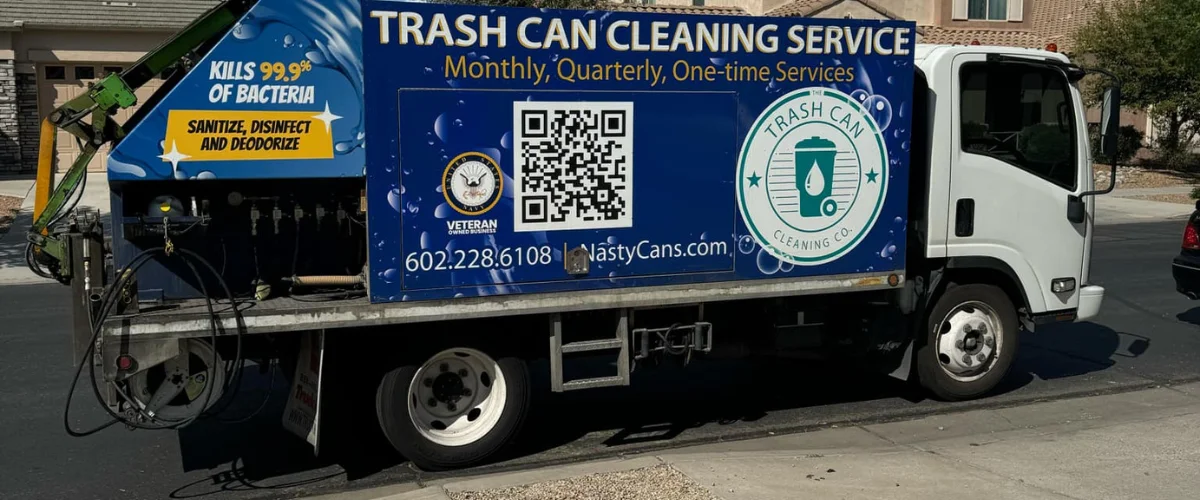
At The Trash Can Cleaning Company, we use custom-designed, self-contained equipment for trash and recycling bins. Our system uses hot water and high-pressure spinning jets, and the equipment collects wastewater rather than allowing it to run into stormwater drains. After cleaning, the bins are sanitized and deodorized as part of our process.
That process is different from treating trash-bin cleaning as ordinary driveway pressure washing. The bins are positioned with the equipment, lifted using hydraulic grabbers, and cleaned specifically as containers.
For Gold Canyon households dealing with recurring grime, food residue, or persistent bin odors, a professional trash bin cleaning service can be a practical part of routine maintenance.
Professional cleaning can make a bin less attractive to flies by removing material they may use as a food or breeding source. It cannot guarantee that flies, maggots, ants, roaches, rodents, or other pests will never return once new waste is added.
How Often Should You Clean a Trash Can?
There is no single schedule that every household needs.
Consider cleaning more frequently if:
your household generates a lot of food waste
bags frequently leak
residue builds up quickly
the bin develops odors soon after pickup
you regularly dispose of pet waste
flies are frequently attracted to the cart
warm weather is speeding up decomposition
A smaller household that produces relatively little food waste may need less frequent cleaning than a larger household with several full carts each week.
For customers who prefer scheduled professional maintenance, we currently offer monthly, bi-monthly, quarterly, annual, and one-time trash-can cleaning options.
Useful Resources for Keeping Trash Bins Cleaner Between Services
A few household products and educational resources can support your routine between deeper cleanings. These are general examples for consumers and do not imply that The Trash Can Cleaning Company uses or endorses a particular outside brand.
Virginia Tech House Fly Guide
Virginia Tech's Extension guide explains the house fly life cycle and why garbage and decaying organic material can become breeding sites. It also emphasizes timely waste removal, tight-fitting garbage-can lids, and sanitation.
Glad ForceFlex Kitchen Drawstring Trash Bags
Glad describes these household bags as having features intended to resist rips, tears, punctures, and leaks. Stronger bags can help contain kitchen waste before it reaches your outdoor cart, although no bag should be treated as leak-proof under every condition.
Simple Green All-Purpose Cleaner
This is one example of a widely available all-purpose cleaner designed for washable surfaces. If you use any household cleaner on a trash cart, follow the manufacturer's directions and confirm that the product is suitable for the material. Do not mix it with other cleaning chemicals.
Rubbermaid Commercial BRUTE Self-Draining Lids
For people purchasing their own waste containers rather than using municipality-issued carts, this is an example of a securely fitting lid design. Rubbermaid describes the lid as having a snap-lock fit and channels designed to reduce standing water on top. Always choose a lid specifically compatible with your container.
Frequently Asked Questions About Our Trash Bin Cleaning Service
How does your trash bin cleaning service work?
Our trash bin cleaning service is a curbside service designed to make the process easy for families and residents. On your scheduled service day, leave your trash cans and recycling bins at the curb after they have been emptied on trash day.
Our truck arrives and uses equipment made specifically for bin cleaning. We use hot water and high-pressure spinning jets to blast away stuck-on garbage, grime, bacteria, and other mess inside your trash bins. We then sanitize and deodorize the bins as part of the cleaning process.
The goal is to give your garbage cans a deep clean so your bins stay fresh, smell nice, and are much easier to use around your house. We handle the dirty work, so you do not have to scrub smelly bins yourself.
Do I need to be home when you clean my bins?
No. In most cases, customers do not need to be home for curbside service. Simply leave your empty bins at the curb where our cleaning truck can reach them.
We recommend keeping your trash cans and recycling bins out after your regular trash collection until we arrive. Your scheduled service day may depend on your local pickup schedule.
If there is ever a question about where to place your bins, send us a message or contact us before your appointment. We want the process to be quick and easy for our customers and neighbors.
How often should I have my trash cans cleaned?
The ideal plan depends on how much trash your household produces, how quickly your garbage cans become smelly, and your budget.
Monthly trash can cleaning can be a good choice for families that regularly throw away food, pet waste, or other material that creates lingering odors. A bi-monthly or quarterly plan may be enough for homes where the bins stay fairly clean between visits. We also offer options for customers who need less frequent service.
Regular cleaning can help your bins stay fresh by removing the buildup that causes odor, attracts flies, and gives bacteria more material to grow on. If you are not sure which schedule is right for your house, contact us, and we can help you choose an affordable option.
Can trash bin cleaning help with bad smells, flies, and pests?
Yes, professional trash bin cleaning can help remove food residue, liquids, bacteria, and other contamination that may cause a strong smell or attract flies. A deep clean can also remove buildup that a quick rinse with a garden hose may leave behind.
Keeping bins spotless does not mean they will stay completely odor-free forever. Once new garbage goes into the bin, new odors can develop. Cleaning also cannot guarantee that pests, rodents, or flies will never return.
Our mission is to remove as much of the dirty buildup as practical so your garbage cans and recycling bins are cleaner, fresher, and less attractive to common pests.
Do you clean recycling bins too?
Yes. Our cleaning service can be used for both trash cans and recycling bins. Recycling containers can become dirty when food, drinks, or other residue is left inside cans, bottles, and packaging.
Even though recycling may seem cleaner than regular trash, spills and contamination can still create odor, bacteria, flies, and a sticky mess inside the bin. Regular recycling bin cleaning can help your recycling bins smell nice and keep the space around your curb or house cleaner.
If you want both trash and recycling bins cleaned, contact us with the number of bins you have so we can confirm the right service for you.
Is your bin cleaning process safe and eco-friendly?
Our process uses equipment built specifically for trash can cleaning. Hot water and high-pressure jets clean and sanitize the inside of the bins, while our self-contained equipment collects the wastewater instead of simply washing the mess toward a street or storm drain.
This makes professional bin cleaning different from spraying dirty garbage cans on the driveway and allowing the wastewater to run away.
We aim to provide a safe, responsible, and eco-friendly cleaning process while helping local customers keep their bins fresh. Our equipment allows us to do the dirty work efficiently without turning your driveway or curb into another cleaning job.
How much does trash can cleaning cost, and how do I pay?
The price can depend on your service plan, the number of bins you want cleaned, and how often you schedule service. Monthly, bi-monthly, quarterly, annual, and one-time cleaning options may fit different household needs and budgets.
For the latest price and payment details, contact our business directly. We can confirm the current cost, available plan options, your service area, and how to pay before you schedule.
We hope to keep trash can cleaning affordable for local families while providing a professional service that saves you time and keeps you from having to clean heavily soiled bins yourself.
What areas do you serve, and how do I schedule cleaning today?
The Trash Can Cleaning Company is a local business serving customers in the Phoenix, AZ area and surrounding communities. Depending on current routes and availability, service may be available for residents in places such as Litchfield Park, Peoria, Glendale, Gilbert, Goodyear, and other nearby areas.
To find out whether we are currently serving your neighborhood, contact us with your address or ZIP code. We can confirm your service area, available service day, schedule options, and the number of trash bins or recycling bins you would like cleaned.
If you are ready to schedule cleaning today, call or send us a message. Our team will help you choose an ideal monthly, quarterly, or other cleaning plan for your home. We want our customers to be happy with a simple process, fresh bins, and less time spent dealing with garbage, odor, bacteria, and mess.
Professional trash bin cleaning cannot stop every future smell, pest, or contamination problem, but regular service can help your bins stay fresh, look clean, and make trash day a little more pleasant for your household and neighbors.
Keep Your Gold Canyon Trash Bins Cleaner
Maggots usually appear because flies found accessible organic waste, not because they mysteriously entered the trash can on their own. Keeping food contained, limiting leaks, closing the lid, removing residue, and maintaining a cleaner, drier cart can all reduce the conditions that attract them.
If cleaning the bin has become another chore you would rather take off your list, our trash bin cleaning service provides professional cleaning for Gold Canyon households using equipment designed specifically for trash and recycling containers.
To ask about service or current scheduling with The Trash Can Cleaning Company, call 602-228-6108 or Contact Us.